

 Deutsch
 English
 Español
 Italiano

In recent years, consumers have shown a growing interest in understanding what is contained in the cosmetic products they use every day. Studies indicate that transparency around ingredients has become a key factor in purchasing decisions, with more than 8 in 10 consumers considering this aspect important when choosing beauty and personal care products[1].
Reading product labels has therefore become an increasingly common habit, driven by greater concern for health, the environment and the origin of ingredients. In markets such as the United States, around 58% of consumers report checking ingredients before purchasing a cosmetic, rising to 87% among those particularly concerned about health and wellbeing[2]. At the same time, digital apps that can scan products and rate them based on their ingredient list (INCI) have become increasingly popular.
This trend reflects a positive shift towards more informed and conscious consumption. However, it also raises an important question: can we assess the quality, sustainability or naturalness of a cosmetic based solely on its ingredient list?
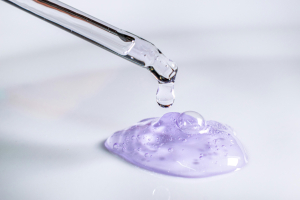 While INCI is a fundamental transparency tool, it does not provide a complete picture of all the factors that determine a product’s overall quality. Origin of raw materials, manufacturing methods, processing techniques, environmental impact, and ethical criteria along the supply chain remain invisible when reading a label. Therefore, although the ingredient list is an excellent starting point, a full evaluation requires looking beyond INCI.
What the ingredient list really tells us
The International Nomenclature of Cosmetic Ingredients (INCI) is a standardised global system for naming cosmetic ingredients. Created in 1973 by a US-based industry association to harmonise terminology, it plays an essential role in ensuring consistency across markets and improving transparency.
In the European Union, the EU Cosmetics Regulation[3] requires all cosmetic products placed on the EU market to clearly display their list of ingredients, ordered by concentration, from the highest to the lowest. The European Commission also maintains a glossary of common ingredient names to ensure a consistency across Member States.
In practice, the INCI list:
|
However, it also has important limitations:
|
What the ingredient list cannot tell us
If the INCI tells us what a cosmetic contains, can it also tell us what it truly is? Seems like not. While the INCI provides a standardised overview of what is contained in a formula, it does not capture the broader context behind those ingredients.
 A key missing dimension is the origin of raw materials. A plant-derived ingredient, for example, may come from very different agricultural systems, from certified organic farming to intensive conventional agriculture. Yet this is not visible in the INCI.
Processing methods are also not reflected. The same raw material can undergo very different manufacturing processes, with different environmental impact, energy use or chemical transformation.
Equally important are the environmental and social impacts associated with production. Issues such as biodiversity protection, soil health, water use, working conditions or fair sourcing practices are central to the sustainability of a cosmetic product, but remain outside the scope of ingredient labelling requirements.
Finally, the INCI does not provide insight into the formulation context itself. It does not explain the role of each ingredient, its concentration, or how it interacts with other components to achieve a specific cosmetic function.
Taken together, these gaps highlight a key limitation: INCI is necessary for transparency, but insufficient to fully assess quality, sustainability or integrity.
The problem with simplified digital scoring
In response to growing consumer interest in cosmetic ingredients, numerous digital tools and mobile applications have emerged providing instant assessments of products based primarily on their INCI lists. While these platforms aim to make ingredient information more accessible, it is important to recognise the limitations of evaluations that rely exclusively on INCI data.
Many systems rely on proprietary databases and non-transparent methodologies. In some cases, ingredient evaluations may not fully reflect scientific complexity or formulation context.
Experts also highlight that ingredient concentration, formulation interactions and usage context are essential for proper evaluation – yet cannot be determined from INCI alone.[4] As a result, simplified scoring systems may reduce complex formulations to a single numerical rating or colour code, potentially oversimplifying reality.
These tools can be useful starting points for consumer awareness, but they should not be considered comprehensive assessments of quality, sustainability or naturalness when based solely on an INCI data. A broader evaluation must include additional factors, such as ingredient sourcing, manufacturing processes and independent certification.
The added value of independent certification
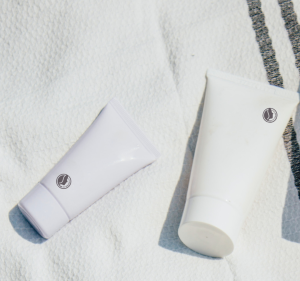 Independent third-party certification provides valuable assurance by verifying that a cosmetic product meets predefined standards through an impartial evaluation. Unlike INCI-based assessments, certification evaluates products involving the entire production chain.
Depending on the standard, this may include raw material sourcing, processing methods, natural or organic content, environmental management and responsible sourcing principles. Through independent verification and regular controls, certification adds transparency and accountability beyond ingredient lists.
Conclusion: reading labels is essential, but not enought
The INCI list remains a key transparency tool, as itt provides valuable information about the composition of cosmetic products. However, it cannot capture the full complexity behind a cosmetic product. Origin, processing, environmental impact, and independent verification mechanisms all contribute to determining the real product’s quality and sustainability.
Therefore, reading labels should be seen as an essential first step rather than the final step in product evaluation. Looking beyond INCI allows for a more complete understanding of cosmetic products and supports more informed decisions.

 Article written by Paula Gómez de Tejada, NATRUE Global Communications and Public Relations Manager, and Aida Martínez, Certification Manager at NATRUE.
Originally published in Bio Eco Actual (available here in Spanish.)
References:
[1] https://sustainablebrands.com/read/consumers-rank-ingredient-transparency-among-most-important-issues-for-brands
[2] https://www.acosta.group/half-of-u-s-shoppers-worried-about-artificial-ingredients/
[3] https://eur-lex.europa.eu/legal-content/EN/TXT/?uri=CELEX:02009R1223-20190813
[4] https://www.elindependiente.com/vida-sana/salud/2025/05/24/las-apps-que-te-dicen-si-tu-cosmetico-es-toxico-entre-la-utilidad-y-la-controversia/