

 Deutsch
 English
 Español
 Français
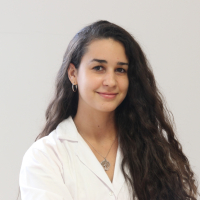
 At NATRUE, we continue to highlight professionals who are shaping a thoughtful and evidence-based approach to health and well-being. In this interview, we speak with Marta Vegas — a health engineer with a specialisation in biomedicine, science communicator, and personal trainer with a passion for holistic wellness.
Driven by a desire to optimise health from both a scientific and practical perspective, Marta has built a career at the intersection of biomedical innovation and lifestyle coaching. Through her work, she translates complex scientific evidence into actionable advice, helping people make informed decisions to improve their well-being through sport, and better lifestyle choices. Outside of her professional life, she brings the same curiosity and dedication to her personal life — exploring new sports, creative cooking, and quality moments with family and friends.
NATRUE: How did you first become interested in the world of health and science? What motivated you to study Biomedical Engineering and pursue a PhD?
| “The step towards a PhD came quite naturally. To be honest, it was never a lifelong dream of mine; rather, it emerged at a certain point as an opportunity to deepen my knowledge and work on international research projects.” |
Marta: My interest began when I was very young, although not from a clinical perspective, but rather from a curiosity to understand how the body works and how technology and the decisions we make can help improve our quality of life. I have always been fascinated by the idea that behind every biological process there are mechanisms that can be measured, analysed and optimised.
That is what led me to study Biomedical Engineering, as it combines science, technology and a real impact on people’s lives. I was particularly drawn to the idea of designing solutions that not only treat diseases but also help prevent them.
NATRUE: On your social media you often talk about toxins and products. What exactly are endocrine disruptors and why are they important?
Marta: Endocrine disruptors are substances that can be found in our environment and that, through ingestion, inhalation or skin absorption, may interfere with our hormonal system. This is important because hormones regulate essential processes in our body, such as metabolism, fertility, growth and even the development of the immune system.
Our hormonal, or endocrine, system works with extremely small quantities of hormones that operate within very precise ranges and at very specific moments. For this reason, repeated exposure to small amounts of certain external substances can still generate biological effects, especially during particularly sensitive stages such as pregnancy, childhood or puberty.
They are important because we are not talking about acute toxicity — it is not that you become poisoned by using a product once — but rather about continuous exposure to small doses and to a mixture of substances that, together with other factors, may contribute to metabolic issues, thyroid alterations, hormonal imbalances or even infertility.
My goal is not to create alarm, but to promote knowledge and awareness, because knowledge allows us to make informed and better decisions.
NATRUE: Many people follow you for your cosmetic advice. How did you first become interested in this topic?
Marta: To be honest, I have never had a particular interest in fragrances, creams, or the excessive use of make-up and cosmetics. In many cases, perfumes, for example, would give me headaches, among other symptoms. During my time working as a researcher in the laboratory, I was also exposed to numerous chemical compounds… I would read studies about them, analyse ingredients and question formulations.
 That is when I started looking at labels with the same critical mindset I apply in the laboratory; but this time at home or in the supermarket. I realised that, in some cases, the difference was not that big. I began making small changes, and my headaches decreased, which made me realise that there is often a significant gap between what is perceived as “safe” and what long-term chronic exposure may actually mean.
It was not a radical change; it happened gradually. I started by replacing certain products, removing others and prioritising simpler formulations. When I began sharing this process on social media, I noticed that there was a lot of interest and a real need for clear information.
For me, it is not a trend or a fad; it is simply a coherent way of understanding health. If you read the label of the food you eat, you should also read the label of the deodorant you use every day.
NATRUE: Speaking about cosmetics, you often give advice on how to choose a moisturiser or make-up that is “toxin-free”. What exactly do you mean by “toxin-free”?
Marta: By “toxin-free”, I mean products that are formulated while avoiding substances that may be potentially harmful to health when used repeatedly, especially those that have been shown to interfere with the hormonal system or that may accumulate in the body. This includes, for example, certain long-chain parabens, phthalates, synthetic fragrances, and some preservatives that may act as endocrine disruptors or irritants.
The idea is to reduce exposure to ingredients that may be unnecessary or questionable. It is not that using a product once is “toxic”, but rather that these products are designed for daily use, and it is this repeated exposure over time that can potentially become problematic.
NATRUE: Before finishing, could you share a simple tip or small change we could make in our daily routine to improve our personal care?
| “It is also helpful to prioritise products with reliable certifications, such as the NATRUE seal, which guarantees that products comply with strict criteria for natural and organic cosmetics, ingredient transparency and the absence of questionable substances.” |
Marta: The most important principle is “less is more”. In other words, we should review and simplify our personal care routines, prioritising quality over quantity. Instead of having five different creams, for example, we could choose a single moisturiser with minimal ingredients, without fragrances or parabens, or with fragrances derived from essential oils.
When it comes to deodorants, for instance, it is advisable to avoid aluminium and other antiperspirants that block the body’s natural sweating process. Instead, choose deodorants designed to prevent the growth of bacteria, which is what actually causes body odour. Ingredients such as bicarbonate of soda can neutralise odour naturally.
NATRUE: Finally, what is the most common mistakes people make when choosing personal care products?
Marta: Without a doubt, the most common mistake is being guided by the scent — by how good a product smells. This makes little sense if we understand that most fragrances listed simply as “parfum,” without specifying the source, are substances with potential endocrine-disrupting effects. On the other hand, if the manufacturer indicates, for example with an asterisk, that the fragrance comes from organic essential oils, then it is reasonable to make a choice based on smell.
Another common mistake is choosing products based on marketing or appearance, without reading the label. Just because something is “natural” doesn’t mean it is completely safe. Stay vigilant, be critical, always read the label, and prioritise products with reliable certifications.
For more information about Marta Vegas, check out her own website and Instagram.