

 Deutsch
 English
 Français
 Italiano
How can cosmetic formulators combine naturality, performance, safety and sustainability? And what role can science and innovation play in shaping the next generation of natural and organic cosmetics?
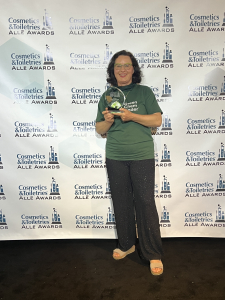 For this edition of True Story, we speak with Dr Barbara Olioso, founder of The Green Chemist Consultancy and GreenChemFinder, board member of the UK Society of Cosmetic Scientists, and a cosmetic scientist with 27 years of industry experience, much of it in the natural and organic sector. She also contributed to the development of what became the first certified organic eau de toilette in 2005. Today, she divides her time between consultancy, writing and hosting The Green Chemist Podcast. Outside work you will find her doing Pilates, looking after the garden and the vegetables, or listening to storytelling — the last two have more in common than people expect: both are about patience, a bit of struggle and a happy ending.
Today, through her consultancy and GreenChemFinder platform, Barbara focuses on helping the cosmetics industry make more informed ingredient choices and move towards greater transparency and sustainability.
NATRUE: You founded GreenChemFinder. What inspired you to create the platform, and what did you feel was missing in the cosmetics industry?
Barbara: The driving force was the time and energy I was spending extracting information from suppliers, one email or call at a time. And the amount of information needed has grown considerably. Selecting on INCI name and natural origin is no longer sufficient: to meet sustainability criteria you need the feedstock, the processing route, the certifications behind it, the palm status, and evidence the supplier can actually stand behind. That information exists, but it sits across hundreds of supplier sites and is rarely presented in a way you can compare.
So GreenChemFinder is really about driving transparency in the industry — making that information visible and comparable in one independent place, without formulators losing precious time to the search, and somewhere they can discover what is new.
NATRUE: When developing a natural or organic cosmetic, what should formulators consider when choosing ingredients and building a formulation?
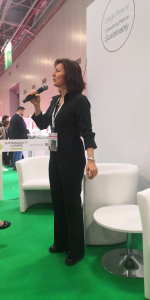 Barbara: It starts with the brief. I have seen too many briefs asking for a claim, performance level, naturality percentage and cost that cannot realistically coexist. The first step is therefore to work with someone technical to reality-check the brief.
Then, check certification status early, look beyond the marketing story to understand an ingredient’s real function and use level, design the preservation system from the beginning, and make sure the supply chain is realistic. Natural and organic formulations need to combine good performance with safety, naturality and sustainability.
NATRUE: What do you see as the biggest challenges in achieving this balance?
Barbara: Preservation, without question. Natural preservatives work in narrower pH windows and need support from formulation design, packaging and good manufacturing practice. Sensory performance is another challenge, as consumers compare natural products with conventional ones. Finally, naturality and sustainability are not the same thing. Without transparent supply chains and meaningful data, you are trying to balance something you cannot measure.
NATRUE: Can science and nature work hand in hand in cosmetic formulation? How can scientific innovation help natural and organic cosmetics achieve better performance while remaining true to their principles?
Barbara: Green chemistry has given us the principles — cleaner chemistry, better performance and eco-design from renewable feedstocks — and those principles apply just as well to biotechnology, applying circular thinking to manufacturing cosmetic ingredients. Regenerative farming is the same thinking applied further upstream: a more holistic approach to agriculture, aimed at restoring and protecting nature rather than simply taking from it. I believe the way forward is to combine green chemistry ingredients with the new regenerative ingredients coming to market.
NATRUE: Are there any new ingredients, technologies or formulation approaches that you find particularly promising for the future of natural and organic cosmetics?
Barbara: Precision fermentation is now delivering actives and lipids at genuine quality and scale, and biosurfactants such as sophorolipids are becoming commercially realistic. I am also watching upcycled side-streams from food and agriculture, which answer a waste problem and a sourcing problem at once, and waterless or concentrated formats, which reduce preservation pressure, packaging and transport in a single move. I would also add regenerative agriculture and the ingredients coming out of those systems, based on the concept of giving back to nature rather than simply taking from it.
Solid formats are also particularly promising, as they can reduce the need for plastic packaging while requiring new formulation expertise to create cosmetics that are both effective and sensorially pleasing.
| “Naturality and sustainability are not the same thing. Without transparent supply chains and meaningful data, you are trying to balance something you cannot measure.” |
NATRUE: What do you think the cosmetics industry can do to make ingredient choices and sustainability claims clearer and more transparent?
Barbara: True education, mostly. An INCI list is a legal requirement, not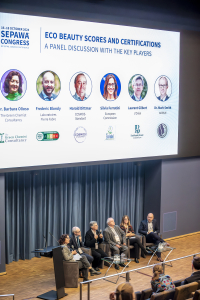 communication, and a self-declared claim is not evidence; recognised third-party certification is, but only if somebody explains what that certification actually guarantees. NATRUE does this well: the media hub, the regular presence at trade shows and on social media, and the willingness to give a platform to different views from across the industry, from suppliers through to brands. That last part matters most: the aim is to engage rather than to sell. Showing consumers how the sector actually operates is far more authentic and convincing than spreading the usual buzz words such as “sustainable” and “eco-friendly”.
NATRUE: Finally, what advice would you give to cosmetic brands that want to make their formulations more sustainable but may not know where to start?
Barbara: Begin with a sustainability strategy. Define what you want to improve, against which benchmark, and what you are willing to invest. This helps ensure that the formulation, concept and budget work together from the start.
And work with formulators who understand this approach and believe in it. Sustainability is a direction of travel, and it is easier to pursue it with like-minded people who have the relevant expertise.
For more information about Dr. Barbara Olioso, check out her own website.