

 Deutsch
 Español
 Français
 Italiano
The global cosmetics industry is undergoing a fundamental transformation driven by consumers’ growing demand for sustainability, transparency, and ethical sourcing. Beyond a simple trend, this shift reflects heightened environmental awareness and a collective effort to reduce reliance on fossil fuels. As a result, brands are re-evaluating ingredient origins and supply chain sustainability to meet evolving market expectations.
This transition is evident in market data: the global natural cosmetics market is projected to grow from USD $642 million in 2022 to over $1 billion by 2030[1]. For example, in Italy alone, by the end of 2024, sales of cosmetics with a natural or sustainable character reached a market value of €3.3 billion, representing nearly 25% of the national cosmetics market[2].
Amid this transition, “biobased” products and their claims are emerging as a key marker of sustainable innovation – particularly in light of initiatives to boost the European bioeconomy. Yet, while the internationally standards are available for biobased products[3], and the term shares some synergy with natural substances in that they may both include non-fossil origin of the carbon atoms, biobased remains widely misunderstood – often viewed as directly interchangeable with claims such as “natural” or “organic”.
This article explores what “biobased” means in cosmetics, how to verify biobased content, the role of biobased ingredients in formulations, the challenges faced in their use, and the evolving regulatory landscape shaping biobased claims.
What does “biobased” mean in cosmetics?
As sustainability becomes a defining factor in beauty innovation, the term “biobased” is appearing more frequently on product labels, ingredient lists, and marketing campaigns. At its core, “biobased” describes products or ingredients derived wholly or partly from living (renewable) biological sources, such as plants, animals, enzymes, and microorganisms, including bacteria, fungi and yeast[4]. This is distinct from fossil-based ingredients, which are derived from petroleum and non-renewable resources formed from dead plants and animals over millions of years.
 The carbon in biobased materials originates from recent photosynthesis and is part of the modern carbon cycle, meaning it does not contribute to long-term greenhouse gas accumulation. However, it’s important to clarify what biobased does not mean, as it is not synonymous with “natural” or “organic,” and biobased substance are not de facto “biodegradable.” The term biobased is sufficiently broad enough to include substances that are partially fossil fuel-based, manufactured from or by GMOs, or highly processed. Moreover, as with any chemical substance, its environmental impact depends on sourcing, manufacturing, and end-of-life disposal.
Currently, most industrial cosmetic products are derived from fossil-based inputs, but biomass – renewable plant or microbial material – is gaining ground as a scalable and environmentally responsible alternative. Biobased products generated from either primary or secondary biomass that respect the cascading principle, can offer chemical versatility and the possibility to substitute conventional raw materials, making biobased ingredients highly attractive for sustainable beauty innovation.
How can we prove that an ingredient is “biobased”?
As the demand for transparency and sustainability in cosmetics continues to grow, so does the importance of scientifically verifying biobased claims. But how exactly can we determine whether a cosmetic ingredient, or product, truly comes from renewable biological sources? Internationally recognised analytical methods now make it possible to quantify the biobased content of a material. The most widely accepted of these is ASTM D6866, a standard testing method based on carbon-14 analysis, also known as radiocarbon dating.
Carbon-14 (¹⁴C) is a naturally occurring radioactive isotope found in living organisms. This isotope is present in biomass (such as plants, algae, and microorganisms) but due to the radioactive decay of ¹⁴C over time, the longer the biological material has been dead, the lower the detectable of ¹⁴C. The method can date materials until 50-60,000 years meaning that ¹⁴C is absent in fossil-derived materials like petroleum, as these are millions of years old. Consequently, carbon-14 analysis is a reliable marker for identifying the age of carbon in a product.
Testing is performed using Accelerator Mass Spectrometry (AMS), a highly sensitive technique that measures the ratio of carbon-14 to stable carbon isotopes in a given sample. This allows scientists to distinguish between biobased carbon and petrochemical-derived carbon in raw materials, intermediate substances, or finished products, regardless of whether they are in liquid, solid, or gaseous form[5]. The results are usually expressed as a percentage of biobased content, ranging from 0% (entirely petrochemical) to 100% (entirely derived from recent biological sources.) For example, a result 80% indicates that 80% of the product’s carbon originates from biomass, with the remaining 20% coming from fossil sources.
In addition to ASTM D6866, other standards, such as EN 16640 (Biobased Products, determination of the biobased carbon content using the radiocarbon method) and ISO 16620[6] (Plastics. Measures biobased content. Determination of biobased carbon content), have been developed to promote consistency and reliability in testing and reporting across the cosmetics industry and beyond.
Biobased ingredients in cosmetic formulation
Biobased cosmetic ingredients are characterised by their carbon content being derived from renewable biological sources. Among the most notable biobased ingredients are raw materials of botanical origin, including vitamins and their derivatives, functional actives like peptides, and key skin-identical components such as hyaluronic acid and ceramides, which play essential roles in hydration and skin barrier protection.
A growing range of cosmetic ingredients is now available in biobased versions, enabling formulators to develop more sustainable and environmentally friendly products without sacrificing performance. Below we explore some of the most prominent categories:
- Emulsifiers

Emulsifiers are essential in cosmetic formulations to stabilise mixtures of oil and water. Traditional emulsifiers are often petroleum-based, but biobased alternatives are increasingly available, many of which are derived from sugar, coconut oil, or other vegetable sources.
Examples include:
- Sucrose esters (from sugar and fatty acids) – mild, skin-friendly emulsifiers used in creams and lotions.
- Lecithin (from soy or sunflower) – a natural phospholipid with excellent biocompatibility.
- Polyglyceryl esters – obtained from glycerol and fatty acids, offering versatility and biodegradability.
These alternatives offer a range of HLB (hydrophilic-lipophilic balance) values and can be used to create O/W or W/O emulsions while maintaining a clean label.
- Preservatives
 Preservation remains one of the most challenging areas for natural and biobased cosmetics, as effective broad-spectrum antimicrobial systems are often synthetic. Whilst some preservatives listed on Annex V to the EU Cosmetics Regulation, like Salicylic Acid, can be found in biobased quality most preservatives are derived from petroleum. Nonetheless, some biobased options that are not listed in Annex V but which can contribute to the preservation of the product are emerging:
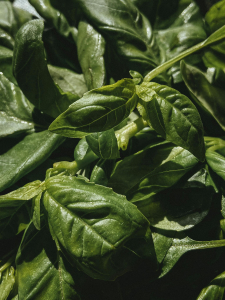
- Organic acids such as levulinic acid and anisic acid, derived from corn and basil respectively, offer mild antimicrobial activity.
- Fermentation-derived ingredients like lactobacillus ferment lysate have demonstrated preservative-boosting properties.
However, biobased options that match the efficacy and cost-efficiency of conventional synthetics are still limited and often need to be used in combination with packaging innovations (e.g., airless dispensers) to reduce contamination risk.
- Plant oils and butters
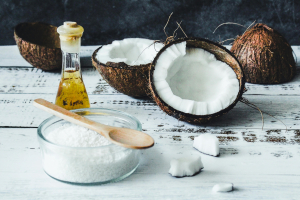 Perhaps the most obvious and traditional category of biobased ingredients is plant oils and butters. These include Jojoba oil, argan oil, coconut oil, shea butter, and mango butter, all derived from renewable sources and rich in functional lipids and antioxidants.
While these ingredients are undeniably biobased, the sustainability of their sourcing (e.g., deforestation, monoculture farming) is a separate factor requiring critical consideration. Certifications like FairWild, RSPO (for palm oil), or organic regulations and private standards can help address some of these concerns.
Challenges and considerations in formulating with biobased ingredients
Transitioning to biobased cosmetics offers a significant opportunity for more sustainable beauty products, but it also presents notable challenges. One of the key obstacles lies in replacing petrochemical-derived ingredients with environmentally and socially responsible alternatives, without compromising product performance, safety, or shelf life. Thanks to advancements in green chemistry and biotechnology, ingredients such as vegetable oils or sustainably sourced squalane are increasingly available to replace conventional emollients like petrolatum. However, formulators must ensure these replacements deliver the desired texture, stability, and efficacy expected by consumers.
The cost of biobased ingredients often remains higher than their synthetic counterparts, partly due to more complex extraction methods such as cold pressing or fractional distillation. Moreover, biobased materials may have a shorter shelf life and can be more susceptible to degradation, which can require adjustments to preservation systems. Reformulating with biobased alternatives typically requires additional research and development efforts, which can extend formulation timelines and increase the final product’s cost. These technical and economic factors can make it challenging for biobased cosmetics to compete directly with traditional products in mainstream markets.
On the positive side, incorporating scientifically validated biobased ingredients provides a distinct marketing advantage. Consumers are increasingly drawn to claims such as “natural,” “renewable,” or “biobased,” but they also demand transparency and verifiability. In this context, being able to prove that an ingredient is genuinely biobased, using recognised, standardised testing methods, adds significant credibility and value to a product.
This type of data is particularly valuable when pursuing voluntary third-party certifications that validate a product’s biobased content. In fact, many labels and sustainability standards, such as NATRUE, require quantitative evidence of biobased origin as part of their certification process. Having such information readily available not only strengthens brand claims but also facilitates certification and demonstrates a genuine commitment to environmental integrity.
Regulatory landscape: navigating the “biobased” claim
In the European Union, cosmetic products are regulated under Regulation (EC) No 1223/2009[7], which primarily governs safety and labelling. However, similar to product claims natural or organic, this regulation does not currently include specific provisions for biobased content claims. Instead, guidance on such claims comes from voluntary standards[8], alongside label schemes verified by independent third-party certifications for associative claims like “natural” – such as the NATRUE Standard.
In 2017, the Technical Document on Cosmetic Claims from the EU Commission[9] laid out six common criteria for product claims: truthfulness, evidential support, fairness, clarity, honesty, and legality. Within this framework, any claim must be substantiated and must not mislead consumers. Quantitative statements, such as “70% biobased content”, require robust analytical evidence, and the testing method employed (for example, ASTM D6866) should be disclosed upon request to ensure transparency.
More recently, on 26 March 2024, Directive (EU) 2024/825[10], entered into force with application by EU Member States from 27 September 2026. Under this Directive, terms like “biobased” are considered prohibited generic claims unless excellent environmental performance can be demonstrated by compliance with the EU EcoLabel or other officially recognised EN ISO 14024 ecolabelling schemes in the Member States.
Beyond the EU, regulatory approaches vary widely. In the United States, the USDA Certified Biobased Product label offers government-backed verification of renewable content based on ASTM D6866 testing, enabling consumers to identify products genuinely derived from biomass. Meanwhile, markets such as Japan and South Korea are progressively integrating biobased content considerations into broader sustainability frameworks, though standardisation remains limited.
This global patchwork of regulatory frameworks poses considerable challenges for international brands, which must navigate differing labelling requirements while striving to maintain consistent messaging and credibility across multiple markets. The lack of harmonisation also creates potential loopholes for greenwashing, where unverified or ambiguous biobased claims can erode consumer trust. To address these issues, many companies increasingly rely on voluntary certifications and independent third-party testing as vital tools to ensure regulatory compliance and uphold the integrity of their sustainability communications.

Article written by Paula Gómez de Tejada, NATRUE Global Communications and Public Relations Manager. Originally published on Erboristeria Domani in Italian.
References:
[1] https://www.marketsandmarkets.com/Market-Reports/natural-cosmetics-ingredients-market-117267500.html
[2] https://www.cosmeticaitalia.it/export/sites/default/centro-studi/i-numeri-della-cosmetica/Cosmetics-by-numbers-march-2025.pdf
[3] https://standards.cencenelec.eu/dyn/www/f?p=205:32:0::::FSP_ORG_ID,FSP_LANG_ID:874780,25&cs=12C4CA7D4006888F70EDD8C10E7C2AD07
[4] https://single-market-economy.ec.europa.eu/sectors/biotechnology/bio-based-products_en
[5] Cossma 5/2025 by Jordan Turner
[6] https://www.iso.org/standard/63766.html
[7] https://eur-lex.europa.eu/legal-content/EN/ALL/?uri=celex%3A32009R1223
[8] https://standards.cencenelec.eu/dyn/www/f?p=205:110:0::::FSP_PROJECT:61210&cs=163C623C7EB5391B0311C88145C10F3BE
[9] https://ec.europa.eu/docsroom/documents/24847
[10] https://eur-lex.europa.eu/legal-content/EN/TXT/?uri=OJ:L_202400825