

 Deutsch
 Español
 Français
 Italiano
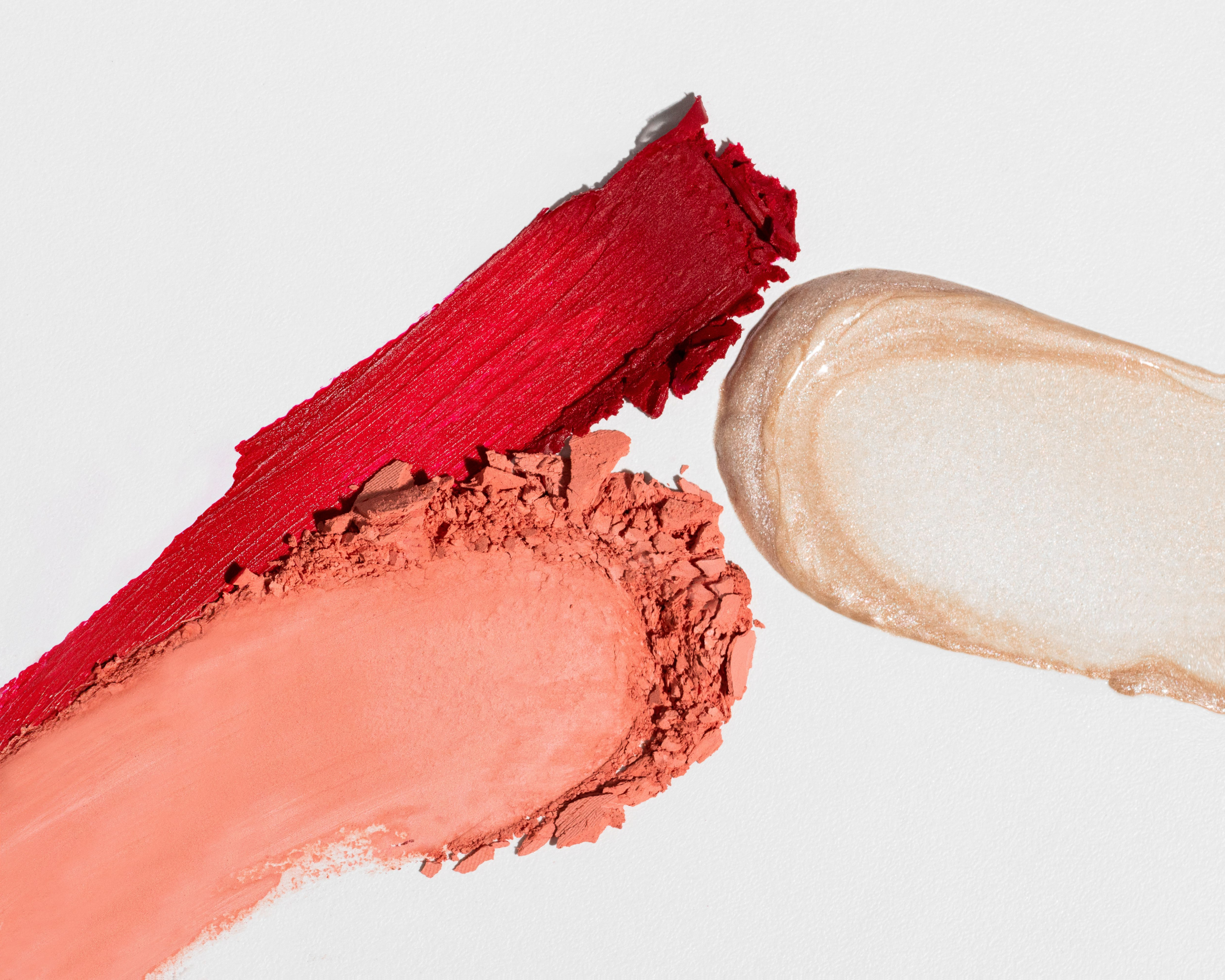
For years, natural make-up carried a reputation it couldn’t quite shake: lovely to wear, but sheer, quick to fade and short on shades. Today’s formulas are rewriting that story. For Natural Cosmetics Week 2026, we look at how natural make-up delivers colour, coverage and wear, and why the most beautiful glow starts with the skin.
 “It doesn’t last.” “It doesn’t cover.” “They never have my shade.” Mention natural make-up, and at least one of these is likely to come up. In the past, some of these doubts may have been justified: the choice was narrower, and so were the results. Since then, formulators have found new ways to work with mineral pigments, plant oils, waxes, starches, gums and other naturally derived materials, and the results speak for themselves.Certified natural make-up is a growing segment in the NATRUE database of certified products [1].
What it’s made of, and why it matters
Let’s start with what doesn’t change. Every cosmetic product sold in the European Union, natural or conventional, must be safe for human health under the EU Cosmetics Regulation [2]. What sets certified natural make-up apart is not safety, but the formulator’s toolbox.
Under the NATRUE Standard, products may contain only natural, derived natural and nature-identical substances, and the last group is deliberately limited to certain pigments, minerals and preservatives. Ingredients widely used in conventional make-up for slip, shimmer or long wear, such as synthetic polymers, silicones and petroleum-derived ingredients, are not permitted [3]. The rule is clear: if a formula contains an ingredient outside the permitted categories, it cannot carry the NATRUE Label.
This leaves no room for shortcuts. Every effect, from smooth glide to lasting wear, has to be achieved with permitted ingredients and skilled formulation. The real question is therefore not whether natural make-up can perform, but how it does it.
The art of formulation: what’s behind the colour and texture
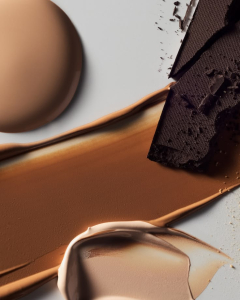 Every ingredient has a story, and in make-up that story starts with colour. Many synthetic colourants used in conventional cosmetics are derived from petroleum and, historically, from coal tar.
Texture tells a similar story. Many conventional colour cosmetics contain synthetic polymers that help create their feel, shimmer and staying power. Some are tiny solid particles, which are what is usually meant by microplastics. Others are liquid or gel-like polymers, sometimes referred to as “liquid microplastics”. Familiar examples include:
- Polyethylene (PE): found in eyeliners, mascaras, brow pencils, lipsticks and eyeshadows for a smooth texture and wear
- Nylon-12: a synthetic powder used in blushers and powders for a silky feel
- Polyethylene terephthalate (PET): glitter particles that add shimmer to eyeshadows and blushers
- Acrylates copolymer: used in liquid foundations, mascaras and eyeliners for long-lasting wear
- Dimethicone: a silicone-based polymer that helps foundations and concealers spread easily
- Carbomer: a thickening and gelling agent in liquid cosmetics
These ingredients are approved for use in cosmetics. The discussion is about what happens after the make-up comes off: when it is washed away, these particles and polymers are rinsed down the drain, and wastewater treatment cannot capture them all. That is why the EU has begun phasing out intentionally added solid microplastics across many product categories, with a longer transition period for make-up than for oral care products such as toothpaste, where intentionally added microplastics are already being phased out [4].
With NATRUE-certified make-up, the choice is already made for you, using the solutions nature provides. Colour comes from minerals such as iron oxides and mica, and texture from plant waxes, starches and natural gums. Synthetic polymers and petroleum-derived colourants are not permitted [3].
Same effect, a natural recipe
Behind every texture you love, there is an ingredient doing a specific job: helping a pencil glide, a blush feel silky or a highlighter catch the light. In certified natural make-up, nature takes on each of these roles:
- Smooth glide in pencils and lipsticks: plant waxes such as candelilla, carnauba and rice bran wax
- Silky, soft-focus powders and blushers: mineral powders such as kaolin, and plant starches from rice or corn
- Shimmer in eyeshadows and highlighters: mica and other mineral pigments
- Long wear in mascaras, eyeliners and liquid foundations: natural waxes, resins and film-forming polysaccharides
- Easy spreading in foundations and concealers: bio-based esters and light plant oils [5, 6]
- Gel and fluid textures: natural gums such as xanthan gum
The science is moving fast. Studies show that plant-derived esters can reproduce key sensory properties of silicones, such as easy spreading and a light, non-greasy finish [5, 6]. Fermentation adds yet another tool: under the NATRUE Standard, microbiological and enzymatic processes using naturally occurring microorganisms or enzymes are permitted within defined conditions [3], opening the door to ever more sophisticated natural formulas.
Where natural make-up shows its own character
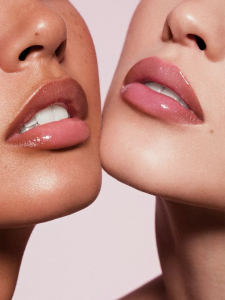 Natural make-up does not, and will not, need to copy conventional make-up feature for feature to be effective. In conventional make-up, long wear, transfer resistance and water resistance often rely on film-forming synthetic polymers and volatile ingredients, many of which are not permitted under natural cosmetic standards. Natural formulas use film-formers from nature instead, such as waxes like beeswax and candelilla wax, or polysaccharides like xanthan and pullulan. Performance depends on the individual formula, not on the word “natural” alone. This is where the art of formulation comes in. Here is what you can expect:
Base. Buildable coverage, from a sheer, barely-there finish to something more substantial. Shade ranges keep expanding, although matching a very broad spectrum of skin tones remains an area for innovation.
Colour. Mineral pigments such as iron oxides and mica deliver rich, buildable colour in eyeshadows, blushers and bronzers, and advances in pigment technology have made application smoother and the finish more even.
Eyes. Pencils based on plant waxes glide on easily and set well. Natural mascaras tend to be water-resistant rather than fully waterproof, yet smudge-proof formulas can now stay in place for up to twelve hours.
Lips. One of the category’s great success stories. Plant waxes, oils and butters create lipsticks, balms and lip oils that pair strong colour with lasting comfort.
The glow starts with the skin
Make-up and skincare are moving closer every year, and this is exactly where natural formulas shine. Tinted serums, skin tints, tinted balms and lip oils combine colour with care: plant oils and butters bring comfort, plant-based humectants help maintain hydration, and botanical extracts can offer antioxidant properties.
Rather than masking the skin, these products even out the complexion with a light, skin-like finish: the kind of glow that looks like healthy skin, not make-up. On busy mornings, one hybrid product can take on some of the work of a primer, a moisturiser and a foundation. And many people find natural formulas comfortable to wear from morning to evening.
How to make natural make-up last
Great results come from the formula, but also from the way you apply it. A few professional habits make all the difference:
- Prep, then pause. Start with well-moisturised skin and give your moisturiser a few minutes to absorb. Too much skincare underneath can make make-up slide or pill.
- Think thin layers. Build foundation and concealer gradually, only where needed. A sponge, brush or fingertips all work, depending on the texture and finish you want.
- Set where it counts. A light layer of powder on the T-zone and under the eyes reduces shine and helps creams and liquids stay put. A touch of base on the lids helps eyeshadow go on evenly.
- Give mascara a moment. Let each coat set before applying the next. If your eye area tends to get oily, a light dusting of powder beforehand helps minimise transfer.
- Keep your tools clean. Product build-up on brushes and sponges affects both application and hygiene.
 Put to the test by a professional
Natural make-up and the professional stage are not new to each other. For this edition of Natural Cosmetics Week, NATRUE is putting natural make-up to the test with Loni Baur, the face of the 2026 campaign and a celebrity make-up artist with 30 years of experience. The question is simple: can certified natural products hold their own in a professional make-up artist’s kit? For Loni, the answer comes down to one thing: what a product actually does on the skin. Her vision for the campaign is just as clear.
| “After 30 years behind the make-up chair, I know what a product has to do on skin. Natural formulas can deliver that, and I am excited to show it from the first skincare step to the final touch.” — Loni Baur, make-up artist |
Natural make-up is not about hiding the face behind a flawless mask, but about bringing out what makes each person unique:
|
“Beauty becomes more interesting when it feels personal rather than too perfect.” — Loni Baur, make-up artist |
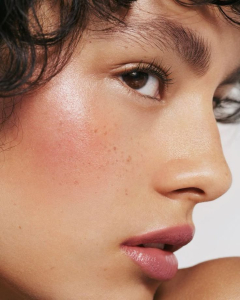 Where to find NATRUE-certified make-up
Looking for a place to start? A growing number of brands offer NATRUE-certified make-up, among them Dr. Hauschka, lavera, alverde, Alterra and many others. To explore the full range of certified make-up, from foundations to lipsticks, visit the NATRUE database [1].
Glow up, naturally
Natural make-up is no longer a compromise between values and results. As NATRUE puts it, natural and scientific are not opposites but allies [7]. For everyday needs, it already delivers colour, coverage and comfort. Look for a recognised natural certification such as the NATRUE Label, choose textures that suit your skin type, and with a few smart habits your make-up can last from morning to evening.
| “Natural beauty shouldn’t mean compromise. With Natural Cosmetics Week 2026, we want to show that certified natural and organic cosmetics perform across the whole routine, from skincare to the final touch of make-up.” – says Viktoria Potko, Global Communications and PR Manager, NATRUE. |
This Natural Cosmetics Week, swap one product in your routine for a NATRUE-certified alternative and see for yourself what it can do.
 Article written by Viktoria Potko, NATRUE Global Communications and Public Relations Manager, for Natural Cosmetics Week 2026.
References:
[1] NATRUE. Database of NATRUE-certified products. Available at: https://natrue.org
[2] Regulation (EC) No 1223/2009 of the European Parliament and of the Council of 30 November 2009 on cosmetic products. Official Journal of the European Union, L 342, 22.12.2009, p. 59. Available at: https://eur-lex.europa.eu/eli/reg/2009/1223/oj
[3] NATRUE. NATRUE Label criteria: requirements to be met by natural and organic cosmetics, Version 3.9, with applicable annexes. Available at: https://natrue.org/our-standard/documents/
[4] Commission Regulation (EU) 2023/2055 of 25 September 2023 amending Annex XVII to Regulation (EC) No 1907/2006 (REACH) as regards synthetic polymer microparticles. Official Journal of the European Union, L 238, 27.9.2023. Available at: https://eur-lex.europa.eu/eli/reg/2023/2055/oj
[5] Goussard, V., Aubry, J.-M. and Nardello-Rataj, V. (2022). Bio-based alternatives to volatile silicones: relationships between chemical structure, physicochemical properties and functional performances. Advances in Colloid and Interface Science, 304, 102679.
[6] de Castro, M. et al. (2025). Exploring bio-based alternatives to cyclopentasiloxane: paving the way to promising silicone substitutes. Colloids and Surfaces A: Physicochemical and Engineering Aspects, 707, 135915.
[7] NATRUE (2025). Natural Cosmetics Week 2025: “Natural Care, Real Impact: Trust What’s Behind the Label”. Available at: https://natrue.org