

 Deutsch
 Español
 Français
 Italiano
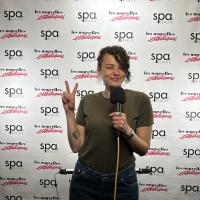
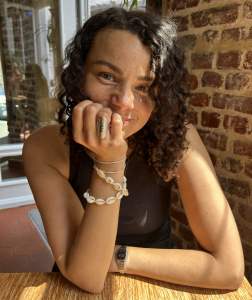 At NATRUE, we continue to highlight the professionals who are shaping a thoughtful and transparent approach to natural beauty. In this interview, we speak with Rachel Dipinto — a beautician, herbalist and aromatherapist with over fifteen years of experience in skincare and well-being.
Driven by a deep curiosity for the skin, plants and the science behind cosmetic ingredients, Rachel has developed a holistic and educational vision of beauty. Through École de Beauté Vivante, she has been sharing this approach since 2022, bringing together traditional botanical knowledge and modern cosmetic science to explore what she calls “living beauty”.
NATRUE: Rachel, you are a herbalist, aromatherapist and beautician. What inspired you to combine these three paths into your work and eventually to found École de Beauté Vivante?
Rachel: What inspired me was a deep curiosity about what we apply to our skin: the ingredients, how they work, their biological interactions with the skin, and the power of plants. I have always been fascinated by skin biology as much as by herbal medicine.
There is also a strong sensory dimension in my work. Certain cosmetic actives derived from plants, and especially from essential oils, can bring an added emotional and sensory layer to a facial treatment. They allow the client to truly travel through the experience. École de Beauté Vivante was born from this desire to connect science, plants, skin and sensoriality in a meaningful and respectful way.
NATRUE: The name of your school highlights “living beauty”. Could you explain this concept and how it differs from the conventional approach to cosmetics and skincare?
Rachel: “Living beauty” refers to the idea of life itself: active ingredients, molecular interactions, and the dynamic relationship between cosmetic formulas and the skin. For me, these interactions are part of what I call the “living” dimension of beauty.
I don’t position my work as better than conventional cosmetics. After more than fifteen years of experience, I don’t believe in opposing one system to another. This is simply my path, my reality, and what I choose to share. It is not about superiority, but about transmission, education and understanding.
NATRUE: As a herbalist, what plants or botanicals do you consider indispensable for natural skincare?
Rachel: I live in Belgium, and I strongly believe that European plants are often underestimated. We tend to look for exotic plants from far away, while our local flora is incredibly rich and effective.
Plants such as chamomile, lavender, rosemary, thyme, calendula, cornflower, or even carrot oil macerates are powerful cosmetic ingredients. They can be soothing, anti-inflammatory, regenerating, illuminating, and protective for the skin. Europe has a strong botanical heritage that deserves to be valued.
|
“Natural beauty is about self-acceptance. It is about seeing beauty with the heart and the mind, with or without makeup. It is about enjoying the simple gesture of applying a cosmetic product without false promises.” |
NATRUE: You often underline that natural cosmetics are more than just replacing synthetic ingredients with “green” ones — it’s a complete shift in philosophy. Could you elaborate on this?
Rachel: Thank you for this question, because my thinking has evolved a lot on this subject. Over the years, I have read many independent scientific articles and realised that I sometimes repeated ideas without fully understanding their scientific meaning.
For a long time, I believed that an ingredient synthesised in a laboratory was automatically worse than a natural one. Today, I know this is not true. In modern cosmetology, it is possible to synthesise molecules inspired by nature in a very responsible way. These molecules can be more stable, safer, and more respectful of both the skin and the environment.
A lab-synthesised ingredient can absolutely have its place in what we call “clean” cosmetics. This shift in my philosophy is largely linked to my current studies: I am in my first year of a Bachelor’s degree in Chemistry, with a focus on biochemistry. I am still learning, but even after a few months, my understanding of how nature truly works has deepened. I feel aligned with what I call a form of green chemistry.
NATRUE: Consumers can feel overwhelmed by marketing claims about “natural” beauty. How do you think independent certification, such as NATRUE, contributes to transparency and trust?
Rachel: This is exactly where the problem lies. Some brands use very aggressive marketing claims to position themselves as “better” by default: “100% natural”, “vegan,” “not tested on animals”, “inspired by nature”. These messages are very attractive, but they can also be misleading – in fact, they can do it because there is a lack of regulation.
A dermatological cosmetic that does not rely on greenwashing is not necessarily worse than a natural one. This is where independent organisations and certifications play a key role. They act like a lighthouse for consumers, helping them navigate through confusing claims.
Ultimately, it comes down to preferences and values: environmental concerns, skin health, ethical choices. Everything is often mixed together, creating confusion. There is a real need for clear, honest communication, and this is something that independent associations, professionals and educators, including myself, are trying to contribute to.
For more information about Rachel Dipinto, check out her own website and Instagram.