


 Deutsch
 Español
 Français
 Italiano
Our skin is constantly exposed to external stressors. UV radiation, air pollution, stress and climate-related changes increasingly affect both skin appearance and skin health. At the same time, expectations of modern skincare are evolving. Consumers are no longer simply looking for “natural” ingredients, but for products that combine scientifically substantiated efficacy, sustainable sourcing and a holistic skincare experience. In fact, 84% of German beauty product buyers say that a product’s sensorial feel is just as important as the claims it makes[1].
This shift is particularly evident in the growing use of marine ingredients. Under the umbrella of “Blue Beauty”, an emerging segment of the cosmetics industry is bringing together marine-derived ingredients, sustainability and science-led skincare. Market analyses predict strong growth for the global market for marine cosmetic ingredients in the coming years. Germany is already one of Europe’s most dynamic markets, accounting for the largest revenue share (32.1%) of the marine ingredients market in 2024[2]
This development reflects more than a passing trend. According to several industry analyses, the global market for algae-derived cosmetic ingredients is expected to exceed USD 1.1 billion by 2032, with annual growth rates of more than 8%[3]. The new generation of marine ingredients is no longer defined solely by its natural origin, but by the way it is sourced. Biotechnology, traceability and ocean preservation have become central pillars of the Blue Beauty movement.
Sustainability determines credibility
A closer look at marine ingredients quickly reveals that “natural” does not automatically mean sustainable. The ocean is often perceived as an almost inexhaustible resource, despite being an extremely sensitive ecosystem.
Sustainability therefore begins long before the ingredient itself. It starts with its origin. What matters is how raw materials are obtained, the conditions under which they grow, and the extent to which environmental impacts are taken into account.
The responsible use of marine resources encompasses several aspects: selecting suitable and resilient species, favouring sustainable cultivation over the overexploitation of natural stocks, and ensuring that wild harvesting is carefully managed in line with natural regeneration cycles. Equally important are the protection of sensitive marine habitats and the continuous monitoring of biodiversity and water quality.
Transparency is another essential element. Only when the origin of ingredients, processing methods and supply chains are fully traceable can sustainability be properly verified. This is where the distinction is made between a genuinely sustainable marine ingredient and one that merely serves as a “green” marketing claim.
What are marine ingredients?
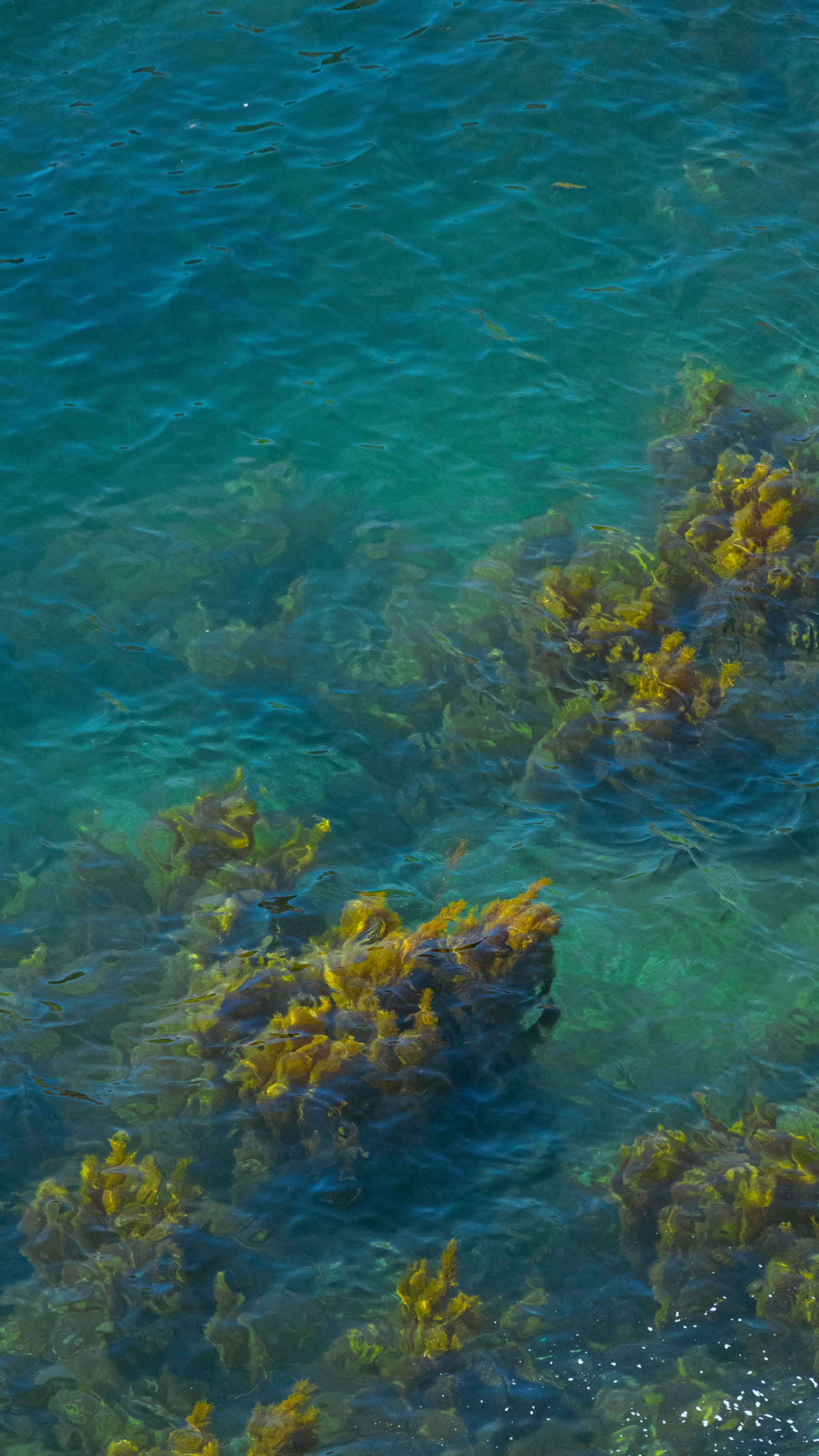
 Marine cosmetic ingredients are substances obtained directly or indirectly from marine sources. These include algae, seawater, sea salt, marine minerals, as well as biotechnology-derived ingredients such as fermented marine sugars and marine polysaccharides.
Marine raw materials are regarded as one of the most versatile sources of active ingredients in modern natural cosmetics. Algae, in particular, are at the forefront of innovation. They contain minerals such as magnesium, potassium and zinc, as well as bioactive compounds including amino acids, polyphenols and polysaccharides. Studies have associated certain algae extracts with antioxidant properties, improved skin hydration and support for the skin barrier. Many of these benefits are attributed to marine polysaccharides, which are able to bind water and are therefore widely used in hydrating formulations.
The growing demand for lightweight formulations has further increased interest in these ingredients. Microalgae are considered one of the sector’s most innovative developments. Thanks to their content of polysaccharides, amino acids and other bioactive compounds with moisturising and film-forming properties, they are particularly well suited to lightweight formulations such as serums, gels and water-based fluids.
Specific algae extracts, including knotted wrack (Ascophyllum nodosum) and bladderwrack (Fucus vesiculosus), are also being used increasingly in cosmetic formulations. Studies have linked these extracts to antioxidant properties and protection against environmental stressors.
Why marine ingredients are considered particularly resilient
Das Interest in marine active ingredients is also driven by their biological adaptability. Marine organisms are often exposed to extreme environmental conditions such as UV radiation, temperature fluctuations, high salinity or oxidative stress. To survive under these conditions, they develop bioactive protective mechanisms that are increasingly being studied for cosmetic applications.
This resilience makes marine raw materials particularly relevant for modern skincare concepts focused on protection against so-called urban stress factors. This term encompasses environmental influences such as air pollution and fine particles, which are associated with cutaneous oxidative stress and premature skin ageing.
Alongside algae, seawater, sea salt and marine muds also play an important role in modern formulations. Seawater is primarily used for its mineral content and is associated with remineralising and hydrating properties.
Sea salt, by contrast, has a mild exfoliating effect and supports the mechanical removal of dead skin cells. As a result, it not only contributes to skin cleansing but also influences the sensorial skincare experience.
Mineral-rich marine muds such as Maris Limus are considered cleansing and purifying and are frequently used in formulations aimed at promoting a balanced complexion.
Marine biotechnology as a new generation of active ingredients
Marine biotech-derived actives are also becoming increasingly relevant. Through fermentation, new ingredients such as fermented marine sugars or biotechnologically derived polysaccharides are created. These substances can contribute to the stabilisation of cosmetic formulations and support the functional properties of the final product.
Marine biotechnology is gaining importance within natural cosmetics, as it enables controlled sourcing of active ingredients while also helping to conserve natural resources.
When skincare becomes an experience
Alongside the development of new active ingredients, the understanding of skincare itself is also evolving. Beauty is increasingly perceived as a ritual and a conscious wellness moment. Holistic self-care routines and so-called “neuro-glow” approaches illustrate that skincare today is expected not only to deliver visible results, but also to provide a positive emotional experience.
Texture, fragrance and skin feel are therefore becoming key elements in product evaluation. Marine ingredients particularly support this shift: their hydrating properties and connection to nature align well with modern formulations such as lightweight gel textures, water-based serums or cooling fluids. As a result, marine-based skincare is increasingly not only applied, but experienced as part of a holistic self-care routine.
This development is also reflected in product innovation: the share of cosmetic products with “marine”, “sea” or “ocean” claims has increased by around 13% in recent years, with more than half of these new products launched in Europe[4].
How to recognise genuine natural cosmetics
With the growing variety of marine-based skincare products, it is becoming increasingly challenging for consumers to distinguish certified natural cosmetics from purely marketing-driven claims. The cosmetics market is heavily influenced by unregulated terms such as “clean”, “green” or “natural”, which are often not legally defined.
Certified natural cosmetics labels, such as the NATRUE label, provide clear guidance. They define binding standards for ingredients and production processes. This includes the requirement that only natural, naturally derived or nature-identical raw materials may be used. Certified natural cosmetics strictly limit the use of synthetic ingredients and largely exclude petrochemical raw materials.
In addition, natural cosmetics certifications ensure that environmental and sustainability criteria are met across the entire value chain – from raw material sourcing to the finished product. Certified natural cosmetics therefore become an important tool for making transparency and credibility in the cosmetics market more tangible.
Outlook: where marine natural cosmetics are heading
Marine ingredients are not a short-term trend within natural cosmetics, but part of a longer-term evolution of the industry. They illustrate the direction modern skincare is taking: away from isolated efficacy claims towards multifunctional concepts that more closely integrate performance, skin feel and sustainability.
It is becoming increasingly clear that future innovation will be defined less by individual “star ingredients” and more by intelligent formulations and the combination of different mechanisms of action. Marine actives in particular offer strong potential in this regard, as they combine properties such as moisture retention, antioxidant effects and sensorial experience.
At the same time, expectations around transparency continue to grow. Consumers increasingly demand not only visible results, but also clear, traceable information about the origin, processing and environmental impact of cosmetic ingredients. Sustainability is increasingly seen as a fundamental requirement rather than an added benefit – an implicit expectation of credible cosmetic products. Marine actives are therefore evolving into a central component of modern natural cosmetics – at the intersection of science, sustainability and holistic skincare.

This article was written by Paula Gómez de Tejada, NATRUE”s Global Communications and Public Relations Manager. It was originally published in Vitalstoffe in German (available here)
References:
[1] Mintel, 2026
[2] Databridge, https://www.databridgemarketresearch.com/reports/europe-marine-ingredients-market
[3] https://pmarketresearch.com/chemi/seaweed-cosmetic-ingredients-market
[4] https://www.personalcareinsights.com/special-reports/ocean-derived-beauty-innovation-trends.html